
Your Child Melts Down Over Things That Don’t Make Sense.
They refuse things they can do.
You try to reason, and it makes it worse.
It’s not defiance. It’s overload.
And once you can see it, you can change it.
You’re not missing something. You’re just seeing the wrong layer.
There’s a reason this keeps happening.
The STACK Model™ helps you see what’s building underneath, and what to do about it.
Get the Parent + Child Bundle
If you've ever wondered...
Why did my child explode over something small?
Why does reasoning sometimes make things worse?
Why do meltdowns happen after school, at bedtime, or during transitions?
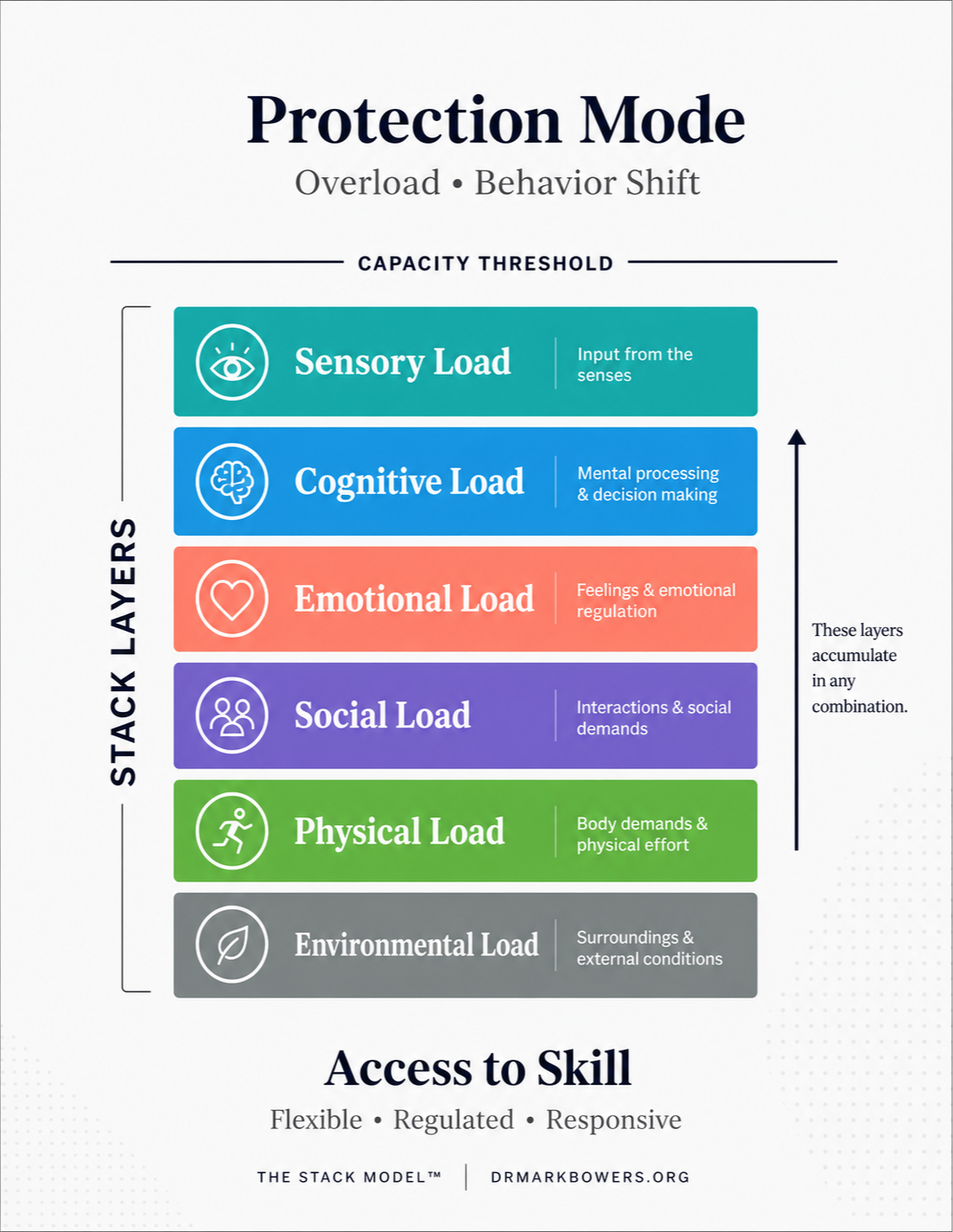
The STACK Model™ helps parents see what is building underneath behavior before everything falls apart.
Most meltdowns are not as sudden as they look.
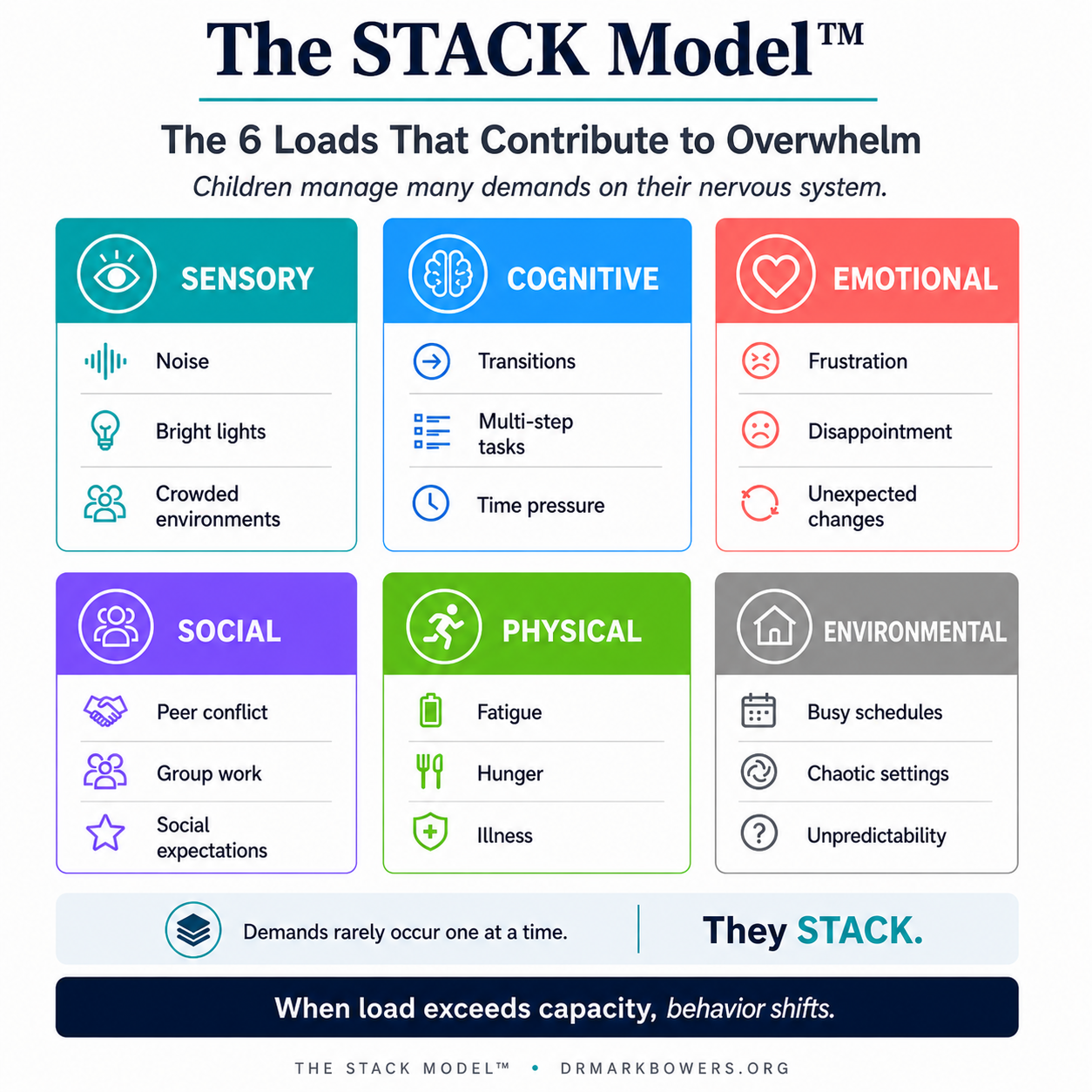
They often happen when too many sensory, cognitive, emotional, social, physical, and environmental demands stack up at the same time.
When load exceeds capacity, behavior shifts.
Try this tonight: Lower one load first.
When things start to fall apart, pause and ask:
Did they sleep?
Have they eaten?
Were there a lot of transitions today?
Was there social stress?
Is the environment too loud, bright, crowded, rushed, or demanding?
Then pick one thing to make easier right now.
Make the task smaller.
Give more time.
Reduce noise or pressure.
Come back to it later
Then try again.
Choose the STACK resource that fits your family
Both options are digital downloads designed to help parents understand what is building underneath behavior.
Choose the Parent Guide if you want parent-facing explanation and worksheets.
Choose the Parent + Child Bundle if you want child-friendly tools and activities too.
The STACK Parent Guide + Worksheets & Reflection Pages
Best if you want to understand your child’s meltdowns, shutdowns, refusal, rigidity, anxiety, or emotional overload through the STACK Model™.
This digital guide and worksheet set helps parents:
- Map their child’s usual STACK
- Recognize early signs of overload
- Understand what may be driving behavior
- Know what to reduce in the moment
- Build a simple plan for home, school, and daily routines
This is not a behavior plan.
It’s a simpler way to see what is happening earlier so you can change what happens next.
[Digital download. No physical book will be shipped.]
Get the Parent Guide + Worksheets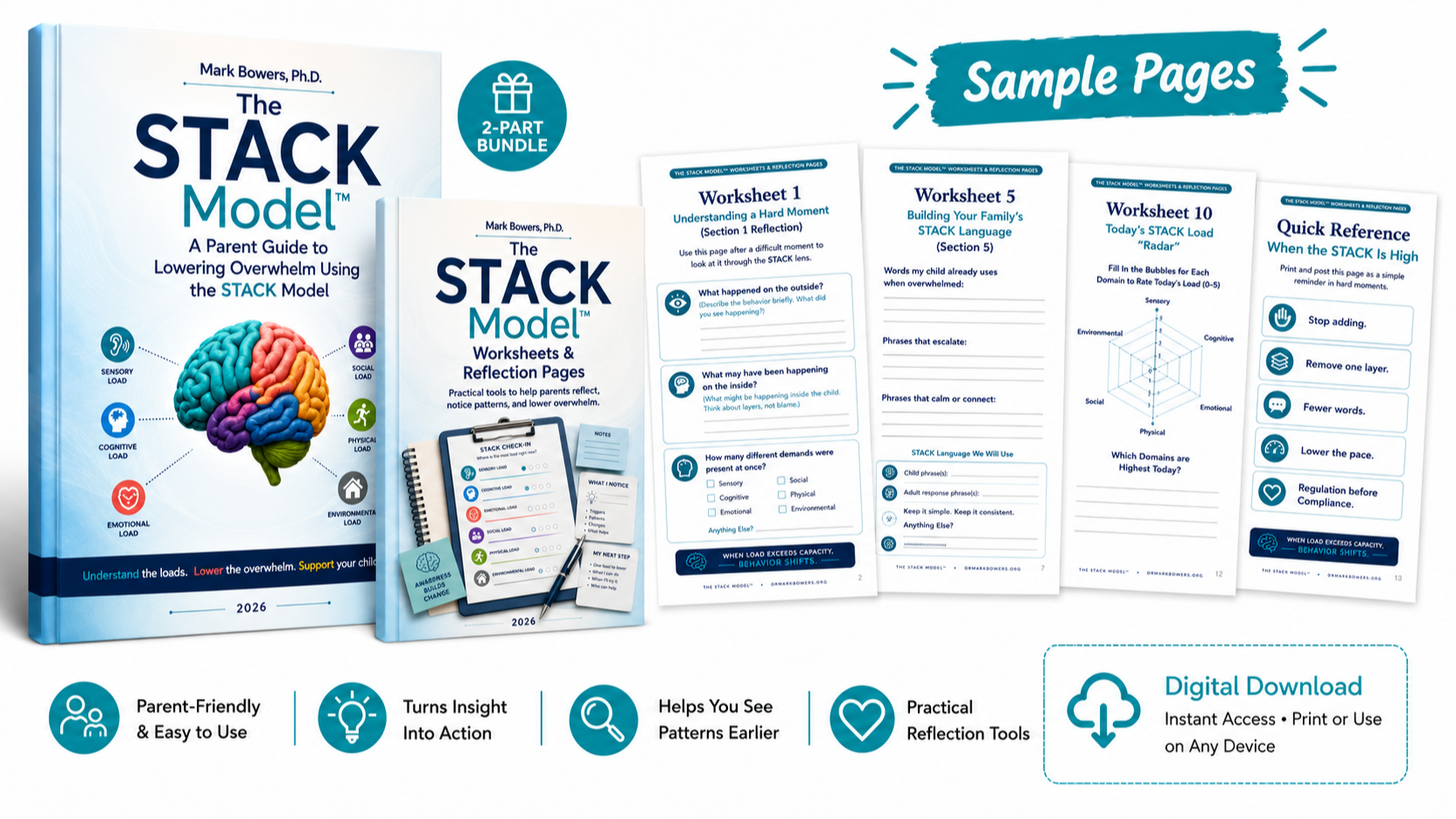
The STACK Parent + Child Bundle
Best if you want the parent materials and child-friendly tools to help your child understand their own STACK.
This digital bundle includes:
- The STACK Parent Guide
- Parent Worksheets and Reflection Pages
- My STACK Guide for Kids
- My STACK Activity Book
- STACK in Action™ Bonus Guide
This option helps families build shared language around overload, early signs, and what helps when things start to feel too big.
This is not about making children responsible for managing everything on their own.
It is about helping adults and children understand the pattern together.
[Digital download. No physical book will be shipped.]
Most families should choose the Parent + Child Bundle if they want to use the STACK Model™ with their child, not just learn it as adults.
Get the Parent + Child Bundle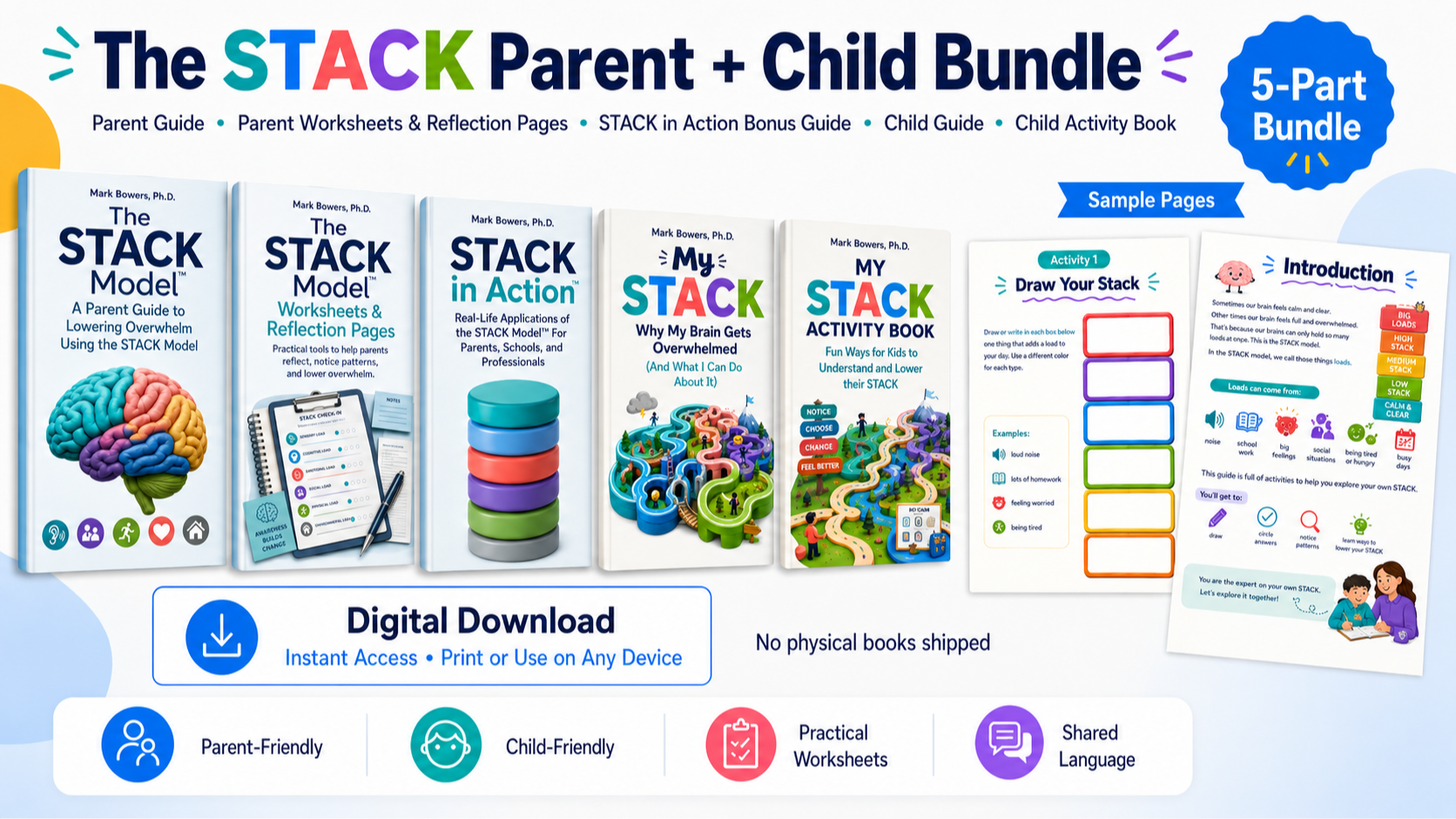
Not sure yet?
Start with the free preview and see if the STACK Model helps you understand your child in a new way.
Preview the Guide
Want to understand the model before your purchase?
Start with one of these short videos
What is the STACK Model™?
How behavior actually builds
Why Good Kids Still Melt Down
Even when they’re trying their best
Why Reasoning Doesn't Work
And why it often makes things worse
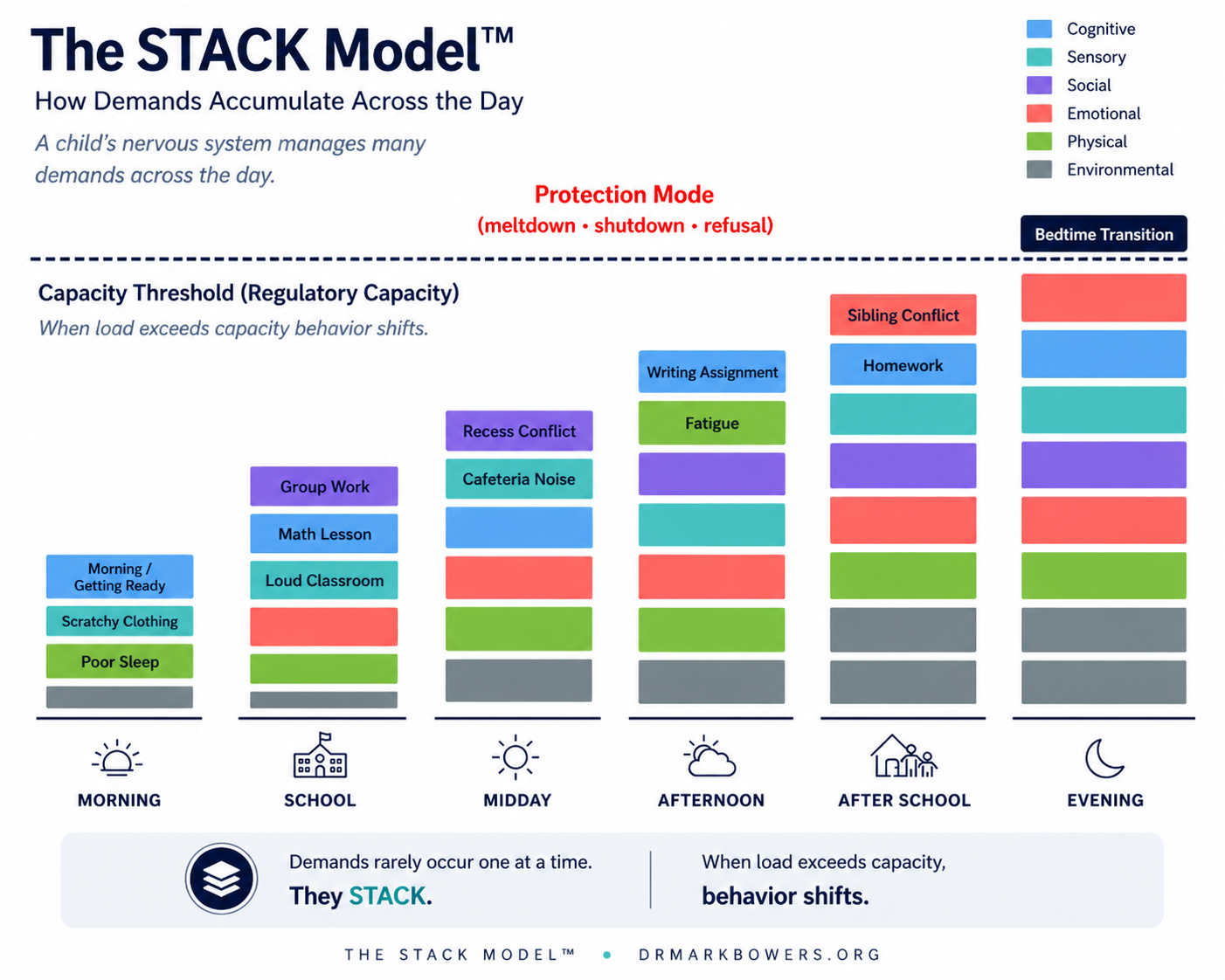
Why meltdowns often seem sudden
It is usually not the thing in front of you.
The final trigger is rarely the full cause.
Small demands can accumulate across the day until the nervous system crosses its capacity threshold.
Poor sleep.
Scratchy clothing.
Noise at school.
Group work.
Academic pressure.
Fatigue.
Sibling conflict.
Homework.
Bedtime transition.
Then one final demand pushes the STACK too high.
That is when it looks sudden.
But it has often been building all day.
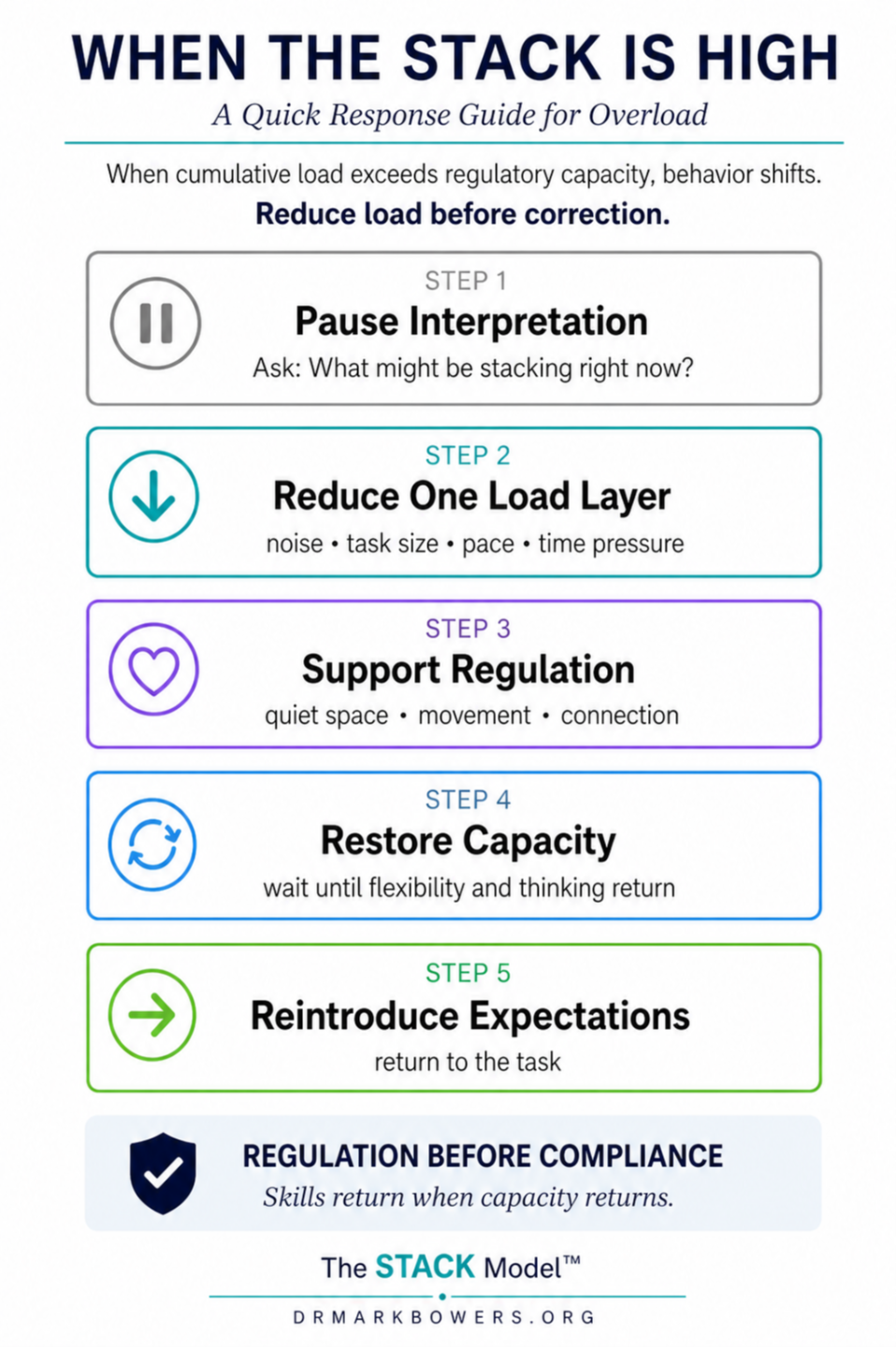
What to say when your child is overloaded:
“Looks like today was a lot.”
“Let’s make this easier first.”
“We’ll come back to this.”
Want a deeper exploration?
Watch the Free Parent Training:
What’s actually behind your child’s meltdowns
In this brief presentation, you’ll learn why meltdowns often seem sudden, why reasoning can make things worse, and what helps when your child is already overloaded.
For Clinicians and Educators
The STACK Model™ is also available as a professional framework for clinicians, educators, and support teams.
The professional version explains the load-capacity framework in greater depth and supports application across home, school, and clinical settings.
Research foundations include work in cognitive load theory (Sweller), executive function under stress (Arnsten; Diamond), and developmental resilience (Masten).
Read the Professional Framework
About Dr. Mark Bowers
Dr. Mark Bowers is a Licensed Pediatric Psychologist and Clinical Director of the Brighton Center for Neurodevelopment.
For more than 25 years he has worked with children, adolescents, adults, and families navigating neurodevelopmental differences and emotional regulation challenges.
His work helps families understand behavior through science rather than shame.
Learn More About Dr. Bowers
When you can see the load, you can change the response.
The STACK Model™ gives parents a practical way to understand what is building, what to reduce, and how to respond before everything escalates.
When load exceeds capacity, behavior shifts.
Choose the resource that fits your family.